What Is a Rotation Laser and When Should You Use It?
Ever wondered how construction crews get those perfectly level foundations and straight walls? The secret weapon might be simpler than you think.
Picture this: You’re standing on a construction site, watching workers effortlessly mark level lines across a massive foundation. No constant measuring, no guesswork, no arguments about whether something’s straight or not. That’s the magic of a rotation laser at work.
If you’ve ever struggled with traditional bubble levels on large projects, you’re about to discover your new best friend.
What Exactly Is a Rotation Laser?
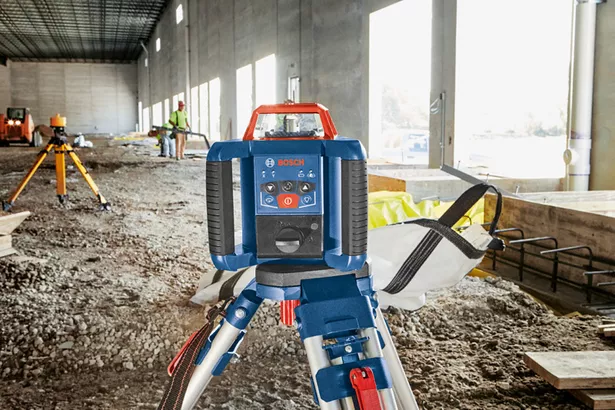
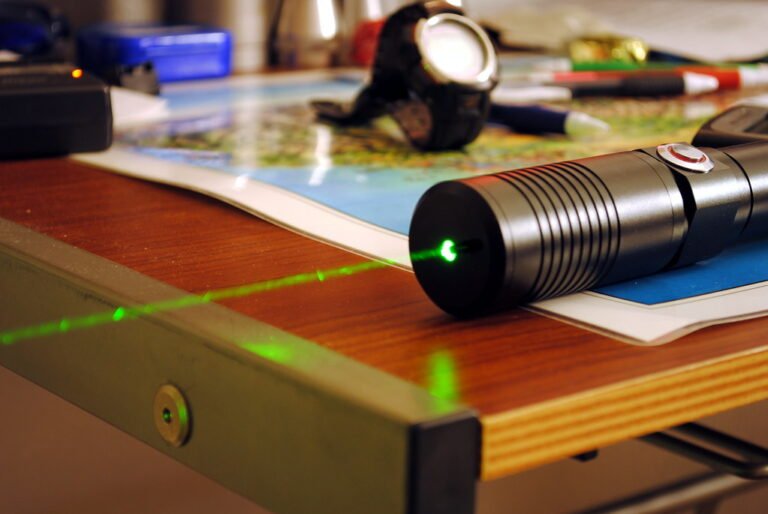
Think of a rotation laser as a lighthouse for construction projects. Just like a lighthouse sends out a beam of light that spins around to guide ships, a rotation laser projects a laser beam that rotates 360 degrees to create a perfectly level reference line.
The beauty lies in its simplicity. Instead of holding a traditional level and constantly moving it around, you set up the rotation laser once, and it does all the work for you. The spinning laser beam creates an invisible plane of light that you can see with a detector or directly with your eyes.
Here’s what makes it special:
- Self-leveling technology: Automatically levels itself within seconds
- 360-degree coverage: One setup covers your entire work area
- Extreme accuracy: Within 1/8 inch at 100 feet
- Weather resistance: Built to handle job site conditions
How Does It Work?

The science is fascinating yet straightforward. Inside the laser housing, there’s a precisely engineered pendulum system that detects when the unit isn’t perfectly level. When you set up the laser, it goes through a quick self-leveling process, then a small motor spins the laser beam around at speeds ranging from 60 to 600 RPM.
Most professionals prefer self-leveling models because they eliminate human error and speed up setup time dramatically.
When Should You Use a Rotation Laser?

Rotation lasers excel in both outdoor construction and indoor applications
Perfect for Large-Scale Projects
If you’re working on anything bigger than a small room, a rotation laser becomes incredibly valuable:
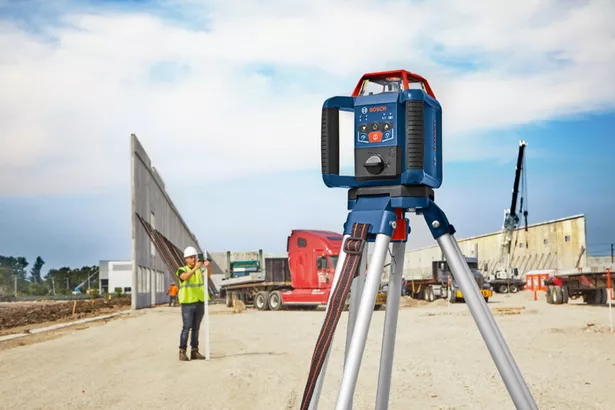
Foundation Work: Setting up forms for concrete foundations requires precision across large areas. A rotation laser lets you establish a perfect level reference that multiple workers can use simultaneously.
Drop Ceiling Installation: Installing suspended ceilings in commercial spaces becomes much easier when you have a level reference line running around the entire room.
Landscaping Projects: Creating level patios, installing retaining walls, or setting up proper drainage all benefit from the accuracy of rotation lasers.
Indoor Applications
Don’t think rotation lasers are just for outdoor construction:
- Kitchen cabinet installation: Ensure your cabinets are perfectly level across long runs
- Tile installation: Maintain consistent lines for large tile projects
- Electrical and plumbing rough-in: Keep installations properly aligned
When Traditional Tools Fall Short
You’ll appreciate a rotation laser most when:
- Your project area is too large for standard 4-foot levels
- You need multiple people working off the same reference point
- Accuracy is critical and you can’t afford mistakes
- You’re working alone and need a reliable reference
How It Works in Practice
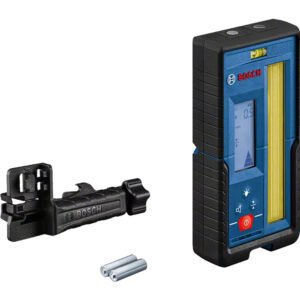
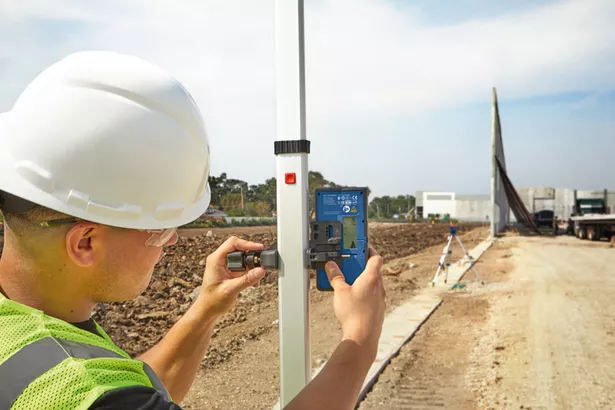
Here’s how it works in practice: Set up the laser at the center of your work area, let it self-level in about 30 seconds, then use handheld detectors to find the laser beam anywhere around your foundation. You can instantly tell if your forms are high, low, or perfect. The entire leveling process takes minutes instead of hours, and there’s no guesswork involved.
Pro Tips for Best Results
Setup Matters
- Always use a sturdy tripod – vibration is the enemy of accuracy
- Set up as close to the center of your work area as possible
- Keep the laser clean and protected from debris
Maximize Accuracy
- Use a detector for best results, especially in bright conditions
- Calibrate your laser regularly according to manufacturer guidelines
- Double-check critical measurements when precision is crucial
Safety First
- Never look directly into the laser beam
- Use proper eye protection when required
- Make sure everyone on site knows a laser is in use
Final Thoughts
A rotation laser isn’t just another tool – it’s a game-changer for anyone working on projects where level and straight matter. Whether you’re a weekend warrior tackling a deck project or a professional contractor managing complex builds, the time savings and accuracy improvements make it an investment worth considering.
The key is understanding when to use it. For small, quick jobs, your trusty bubble level might still be the right choice. But when you’re facing large areas, multiple reference points, or projects where precision is non-negotiable, a rotation laser will quickly become your go-to tool.
Ready to explore rotation lasers for your next project? At CivSol, we specialise in helping professionals and DIY enthusiasts find the right measuring tools for their specific needs. Have questions about rotation lasers or other measuring tools? We’d love to help you find the right solution.
Recommended products
-
GRL 350 HV Professional
Original price was: ₹94,000.00.₹62,700.00Current price is: ₹62,700.00. -
LR 45 Professional
Original price was: ₹21,000.00.₹13,800.00Current price is: ₹13,800.00. -
BT 160 Professional
Original price was: ₹3,600.00.₹2,450.00Current price is: ₹2,450.00. -
Laser Viewing Glasses
Original price was: ₹1,600.00.₹999.00Current price is: ₹999.00.